Null

Show Posts

This section allows you to view all posts made by this member. Note that you can only see posts made in areas you currently have access to.


Messages - propless

Pages: 1 2 3 [4] 5 6 ... 80
76
Random Boat Parts For Sale / HUGE parts sale
« on: August 01, 2016, 07:04:48 PM »
 I'm done with jet boats so I'm cleaning house.  Heading from Fresno down to Long Beach this weekend (Aug 6th, sprint boat races), so if you want/need anything lets meet up and save the shipping.  If you need shipping, wait till next week and see whats left. Race is over so now everything is + shipping.   Thank you to everyone that showed up to get their parts. 100% of the parts people put "on hold" where picked up, not one single person flaked.  :thumbup:

 If you don't like the prices, make an offer. Best to just call me, Jeff 559-270-1162

 Brand new, place diverter with "FTN" nozzle, blue insert and nice used handle (no cable). Diverter has only been out of the box to take pics, I bought it new.   Diverter alone was over $450.  How about $400 with the handle.  SOLD
 

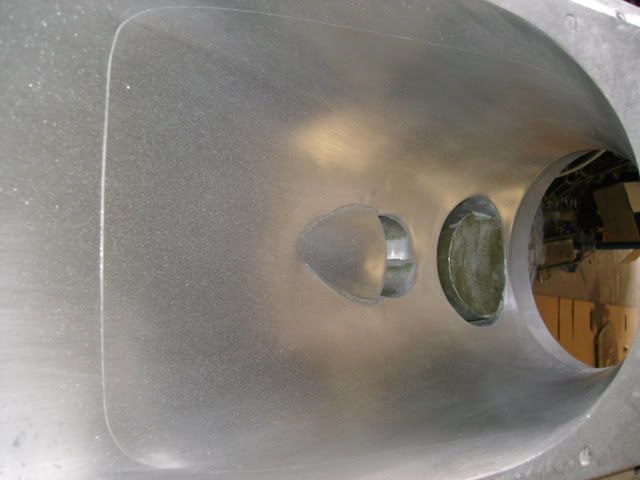
 My good pump stuff.  Berk suction housing, Low profile "R" style intake (uses standard loaders) with a flat shoe, Polished and worked "G" bowl (drilled and tapped for a rideplate cradle), Intake has been matched/blended to the intake and smoother all the way to the impeller area, even the hand hole cover has been smoothed, blended and the huge ugly gaps filled. Cover is still removable.  All for $400, you cant buy a low pro intake for that. A great start to build that "Bad AZZ" pump. SOLD
Also available..
 Polished Berk droop.  $200
 Long drive like (set back pumps). $50
 Ride plate cradle. $20 SOLD
 Old standard nozzle adapter, pretty ugly lots of paint on it. LOL  Make offer


 Berk JB pump core,  flat keel intake with a new blank shoe and rideplate. Needs a shaft, impeller, and kit. $250 SOLD


 Stringer to stringer throttle pedal. Pedal can be moved anywhere across the bar and even adjusts for side to side tilt.  Use it with normal seating or center steer set ups. Made by Nicson, not some home made junk. Will fit up to 26 1/2" between stringers, or cut it down for narrower stringers. Comes with the cable.  $300.


 NICE chrome exhaust tips, 2 1/2" ID. need new flaps. $50


On the right, set of BBC plates and pump brace.  Two piece front mount, flywheel cover is not a "full cover" it mounts using spacers off the motor plate and just covers the rear. Only have 3 or the 6 spacers, so you need to make 3 more (small round spacers sitting above the cover in the pic). Plates are 23 1/2" wide. Raw finish but have all the edges rounded/radius. $200 ? SOLD

On the left, two more covers and some sort of two piece drive line cover that mounts to one of them. These are raw cut/unfinished pieces. $ 40 per cover and $20 for the D/L cover ? All SOLD


 Two sets of 2 piece BBC front mounts. These also cover the water inlets on the block. Drill and tap the plate at the water ports and run your hoses to the plate. No need for extra waster inlet adapters. $40 each SOLD


 SBC cast mounts, they are UGLY, covered with scratches etc. $40 SOLD
 BBC logs, same UGLY scratched condition. One sais Glenwood on the flange the other sais nothing, but they look the same ?? $ 20 SOLD
 Two transom adapters, one angled, one flat. $ 10 each  SOLD
 HallCraft throttle pedal, stringer mount, not pretty but should clean up. $40


 Aluminum tanks with brackets, About 52" X 8". $200 SOLD
 Two piece standard length Driveline. $40 SOLD


 Ok these brackets are for mounting an alternator to the front of the pump. Bolt on over the front bearing cap. Raw cut finish. Use a turn buckle to adjust the alt and you get to figure out how to create a pulley. I have 5 of them.  $10 each and you get hours of fun being creative. 2 SOLD 3 still available
 

 5 of these too. Simple little alternator adjustor brackets for rail kits/whatever. Raw cut finish. $10 each All SOLD


4 header water lines, they all look different, most have at least one bad fitting, $1 for all of them. SOLD


  Fiberglas buckets and bench. Buckets are 20" wide at the widest point and bench is 40" wide at the widest point. Both are about 15" high.  Bench was narrowed to this width. Glass work was done about 8 yrs ago and shows no issues. These are a thick/heavy/strong set of seats sprayed with black high fill primer, ready for you to paint your color.  $ 200 SOLD


 Dooley BBC jet pan. Its nasty but solid. Has surface rust inside, so it will need a good cleaning/blasting.  Comes with the tray that bots to the main caps and a few of the bolts/studs to use just so you can get the right new bolt/studs. Do not use these old nasty ones. $ 100 SOLD


 Really REALLY nice set of BBF Rewarder twisty headers with water lines. NO dents, NO heat discoloration past the water lines, NO rust on the flanges, NO rust in the tubes, only some very slight surface rust between the primary tubes right where they merge into the collectors. 2 1/4" OD primaries, 4" OD collectors. $ 600 ?


 Dual EGT gauge with sensors. $ 125 pending
 I searched all over looking for a new one like this to figure a price, the ONLY one I could find like this was for aircraft and was $325.


 Autometer bulb type warning light with oil pressure sender. $ 25

 
 Left foot pedal (foot rest). Wont polish, must be clear coated. All other stuff in this pic is sold $ 75


 If you want some cheap seats and don't care if your friends, wife/girlfriend, and everybody else laughs at you. I've got a deal for you !!! They even have nice TALL backs so your super fast boat doesn't break your back in half with its awesome acceleration like it would with some low back "boat" seat. They are made from light weight space age fiberglass with special vinyl covers, and even have a very small amount of padding. What will they think of next ? These will definitely add at least 10 MPH to your boat.  I can even finance these seats !! All it takes to make them yours is $ 20 down (in cash) and then I don't care if you ever make another payment.  If any spiders, ants, or any of Gods little creatures crawl out of them when you get them home, they are yours free with the purchase.

77
Jet Pumps / Re: explain jets to me
« on: July 19, 2016, 02:07:41 PM »
Seriously though. I've been told by a couple people that put some serious HP to their aluminum impellers they can last

Just depends on how you treat it. Mainly keeping the pump hooked. Try not to shock load it by coming out of the water.

I'd imagine yours should last longer than mine being hit with the nitrous. It's an instant 1k rpm when it hits.

I try my hardest to not come out of the water, and if I do I try my hardest to lift off the throttle before it hits the water again

I call bullshit on the serious hp, it's simply a matter of luck and time.

Been lucky and running out of time.

I have scattered two aluminum Berkeley impellers on nothing but RPM and horsepower. It destroys more than just the impeller btw.

GT

 IMO, its a crap shoot with aluminum and high HP.  I cracked a brand new aluminum with about 500 HP (cracked one "blade" at the hub with no mark from it hitting anything) replaced with another one and never had a problem after that.  I got lucky and saw the crack while checking the loader before it got too bad and came apart.  You might get a good one that will take it, and you might not. Is it worth the risk to YOU, that's the question.  ;)


that was what i was thinking about.... since its going to be more than a little while before i can start ordering parts. I figured it woul give me something to do.


Let me ask another question. Since in my application my cleanout is not usable. Would it be worth it having it welded/capped off?

 I wouldn't worry about it.  With the exemption of a good/properly set up loader, your best investment in time or money will be behind the suction housing.  If you weld it shut, what about when you want to swap your good pump into another hull someday where it would be useable, or you want a pop off valve ?  Some places use to sell a "tight fit" cleanout cover, kinda like what I made. If your worried about it you might try finding one of those.  That way its still removable (like mine) if someday you need it, and you don't ruin a good suction housing.

 If you really need something to do...... Grab a sawzall and cut all the "extra" weight you can find out of the boat.  It will help more than messin with the suction housing.

 If you still have any doubts, I'm sure GT will be along shortly to help explain how much time and effort I wasted in that suction housing. LOL  But it looks cool.  8)

78
Jet Pumps / Re: explain jets to me
« on: July 19, 2016, 01:11:12 PM »


GT! Would it be worth my time trying to smooth out the casting inside the suction housing? Getting rid of the rough casting marks?

 Unless your suction housing is especially nasty inside, probably nothing you would notice with the seat of your pants.  I spent a bunch of time blending and smoothing one, front edge of the intake all the way through the suction housing to the impeller. Even remade the cleanout cover to fit nice and tight. Never got to try it, but after I was done I was told it wouldn't make much difference.  And this was ALOT of work. Still have this pump sitting in my spare bedroom.


79
Not really.

What I did is make a small heat exchanger to control the inlet water temperature. It's about half the size of a full on closed cooling deal.

It gets heated by the leaving water from the engine,  I'm thinking of putting the oil cooler in there as well.

Uses a thermostatic element to push a double headed valve against a travel limiter and a spring.

I think it's going to be pretty awesome.

Could be wrong.

GT

 I don't think your wrong, sounds interesting.  And you well know, if I thought it was dumb I would tell you.  ;)  Glad to see its not a closed system.


80
 So GT, is this really only about another plan for a closed cooling system using a heat exchanger ? Looked back at you second post and saw "heat exchanger".  :-\

81

I can personally guarantee that will never happen. Looking into carbon fiber. Metal is stupid expensive.

It will also technically be union made lol. .


Local 393 Steam fitter/pipe fitter San Jose.

GT

 I knew you would love the China thing.  :-*

 Will be interesting to see how you actually make his work. The idea sure has potential.

82
I have built a small working prototype.

When I get an engine in White Trash I'm going to build a full size one.

The reason I asked about price is because there will be roughly $120 cost in materials and I'm trying to figure out how to make it more affordable.

 You could have it made in China.  :sly:


83
Projects / Re: 1992 liberator tunnel 20'
« on: June 29, 2016, 11:51:29 PM »
 You can do a search for "Eliminator Scorpion" or "Advantage Banshee".   They're all the same boat. 

84
Engine Mechanical / Electrical / Re: Carburetor question
« on: April 28, 2016, 02:01:10 PM »
Such a loaded question.

What manifold,  what carburetor,  what cam grind?

Sent from my SCH-I545 using SoCal Jet Boats mobile app

 So true, "such a loaded question".

 This is just my own experience with a performer intake.
 Idle quality and off idle throttle response was best with no spacer and a gasket that sealed the intakes center divider (no open center gaskets).  Even an open center 1/4" spacer/gasket would hurt idle quality and off idle throttle response slightly.  But even the 1/4" open spacer seemed to help a bit at high RPM.  If you look at the higher RPM range dual plain intakes (performer rpm, etc) the center divider in the intake is dropped below the carb mounting flange. 

 I would agree with GT as a start, depending on intended use/application. Then later if you think a little extra top end might be helpful try a small open spacer. An open spacer will not turn a performer into a performer RPM.  And the spacer might not make any improvement, depends on you max RPM.

85
My day cruiser is at 2-2.5mpg, holds 46-48 gals. I use 'river miles' for calcs, 26 mi, 11-13 gals.

Lil 18' bowrider, SBC powered, ~5 mpg, holds 11/side, 70 mi, 13-14 gals. Both were on the river, not a lake.

Because the 'vacuum can(ister)' moves the pick-up coil, the timing (spark) is all over the place, about a 10-15* area under high(er) rpm, 4500+. This was without vacuum to the can. With the vacuum can removed, and the pick-up coil mounted solid, this went away. Timing stayed where it should, ~36*. Motor seemed happiest there.

Dan'l

 Interesting, not sure what would make the timing change like that at high RPM if the canister was in good shape.  The spring in the canister should hold timing steady at your base mechanical curve if there is no vacuum pulling on the diaphragm.  My guess without seeing checking the canister would be a damaged/broken/overly weak spring in the canister letting the diaphragm flop around. There should be no "slop" on the diaphragms rod going to the pick up. Spring pressure holds the diaphragm / rod at base timing curve until vacuum on the diaphragm is great enough to compress the spring and advance the timing. 

86
Proppy-

At 'just 1 mile per gallon' is nearly a 50% increase (on my junk). Not gonna happen. On my sbc jet, 1 mpg would be 20% increase...still ain't gonna happen.

And use the gas dock, if ya need more fuel. Get a sailboat if ya want efficiency.

What about spark chatter, directly resulting from a vacuum advance can?

Float test ALL vacuum advance canisters, first.

Dan'l

 1 MPG, probably at least 30 gal on board (I assume its a 21 cruiser ?), even if it can increase to 1.2 MPG thats an extra 6 miles of play time.

 Please explain what you refer to as "spark chatter, directly resulting from a vacuum advance can".

 BTW, heres a quote that might make you think about your set up.
 
  I ran my boat yesterday - Tunnel ram, twin 450's, 8.5 PV's (looks like I need 7.5's) 3 adults,2 kids coolers with drinks, lunch etc. 50 gal of gas on board, crusing the channel, driving to steamboat, pulling the kids on the raft, idling for long periods of time. Averaged 5.5MPG (GPS based Miles).


I've never once insisted locking it down was the answer. I am an "all in" by 2500 rpm guy though.

And it's smiles power gallon. Not miles. It's not about how far you go,  it's how much fun you had getting there.

GT

Sent from my SCH-I545 using SoCal Jet Boats mobile app


 Don't make me dig up the last time we "discussed" this and quote you, because I don't remember what forum it was.  ;) You basically stated that locking timing will give you the advance needed to give the engine a clean idle with a healthy cam and it wont hurt anything because jets have no/low load at low RPM. 

 Smiles per gallon, great plan.  And fits right into my plan.  The longer that gallon lasts, the more smiles can be had, as long as it doesn't cost you performance.  :thumbup:

87
Thank you both for the knowledge . It definitely made a good read


Sent from my iPhone using SoCal Jet Boats

 LOL, you should see some our older "discussions". GT is a smart guy and full of great knowledge, but sometimes he gets stuck in his old "just lock the timing and run it" caveman style ideas.  ::) 

I guess where you're losing me is the fact that you think it will provide a noticeable increase in fuel economy and performance. I don't think it would be measurable in s jet boat. I played with it on an I/O (not "vacuum" but a programmable ECU in a configurable laptop) and the window of  improvement was so miniscule that I found the tuning to be more trouble than it was worth.

How can we prove it? I have three potential Guinea pigs.

 Wont be any "performance" (terminology ?) increase, just a potential increase in efficiency at lighter load situations.   Just think, if a typical jet boat with a 20gallon fuel load can increase fuel economy just 1 mile per gallon (proper carp tuning and vacuum advance, its all a combo). That can add quite a bit to the days fun time till the tanks are empty. Come on GT, how many hours have you spent trying to find ways to get that last little bit of efficiency out of the pumps, the hulls, and finding ways to save weight. You know that all helps with efficiency at cruise too. So as long as this idea doesn't hurt your WOT performance (and it wont) why not give it a chance and try it ?  Remember, not all jet boats are race boats.  Some people use them the same way you use that half wacker boat of yours.  It could mean the difference between having the fuel to give the kids that one last tow around the lake on the tube vs just trying to get back to the ramp without a tow rope or paddle.

 To be fair. Even your usual answer of "lock the timing at 36 deg" is better than a typical mechanical advance only distributor on a boat.  How many time have you heard and seen people with a typical "billet" mech advance only distributors they ordered from summit because that's what the "racers" use, they set the total timing, and whatever they get at idle is whatever they get.  They don't have enough timing at low RPM, there is no vacuum, power valves are open at idle,  they idle like crap because fuel is dribbling out of the boosters, and they blame the carb.  ???  We've all seen them, blubbering out through the no wake zone barely able to keep the things running, ands usually getting towed back in.

88

Another thing to consider is the the manifold vaccum will have a flase "low" when an aggressive cam grind is used. The large overlaps and long durations will reduce the effectiveness of any vaccum advance set up. In a normal set up, the vacuum advance will be good for 12-15 degrees advance, 15° at 20"hg and about 2° at 5"hg. the advance is not going to have that large of an effect.


 This why you are having trouble with it. You cant use a "normal" vacuum advance canister with a performance engine. There are canisters out the that will give you 20 deg advance with 10" of vacuum. Its all abut using the right canister. It has to be right for the vacuum levels of the engine, and give the right amount of advance.  There are so many available finding the right one can be worse than trying to find unicorn feathers.  That's why they make adjustable ones.  You will never get a canister like you described to work. It needs to be maxed out at idle, and nobody with a respectable boat can pull 20" of vacuum at idle, heck I cant even pull that much vacuum with the El Camino.  If you have 12" of vacuum at idle, you need a canister that will go full advance at about 10" of vacuum.  A canister like that would still be giving you about 10 deg advance at cruise. 10 deg will make a difference in efficiency at cruise.  If you have 4" of vacuum at cruise now with your mechanical advance only. And you add vacuum advance. It will add timing, adding timing will increase vacuum. You will probably end up with closer to 5 or 5.5" at the same RPM.  It will also lower the high EGTs you have because the power valves are closed and the engine is in "lean mode".

 Side note. If your running an HEI, forget about it. There are NO canisters for the HEI that will work with a healthy performance cam/low vacuum. Trust me, I searched.  :banghead: The "good" canisters only fit the early (pre HEI) GM distributors or aftermarket "small body" distributors. By the time GM went to the HEI they didn't have any engines that had anything close to a performance cam, and the adjustable cans for the HEI don't adjust low enough to go full advance with a healthy cam.  Vacuum advance HEIs are only useful on MILD engines or when hooked to ported vacuum, but then you loose all the advantages of the vacuum advance at idle. 


   Most jet boats I have owned run anywhere between 3,800 and 5,500 RPM, I really don't see it affecting my fuel budget.


What the hell have you been up to? Tell me you bought the Daytona back from John.......... Please tell me that......

$10k was criminal cheap.....

GT

 Nothing will effect YOUR fuel budget, if you don't try it. The idea is correct, and it will work, just needs the right parts.  And no, my mag doesn't have vacuum advance.  But if my boat was a lake boat that had to go out all day, pull kids around on floaties, cruise around as much as possible, and if it was a fuel sucking jet, I would defiantly use any possible thing out there to help with efficiency.

 John sold the Daytona ? I didn't know that.  10K was way to cheap for that boat !!!  My Daytona now is a Daytona "sprint", V-drive flatbottom.  >:D

89

A vacuum advance should really be called a vacuum retard.

Tell me why you think a vacuum advance is the way to go on an engine that,  if tuned correctly,  will create virtually no vacuum at wide open throttle.

The literal only way you can make a vacuum advance work is if you were able to determine how much advance the engine can remove from itself (again,  works like a timing retard) and still sustain acceleration without detonating itself to pieces at intermediate throttle settings. It would be very difficult to tune without the aid of an extremely adaptive ecu.

As the advance starts to drop when the engine comes up to wide open throttle (speaking strictly jet boat) the vacuum numbers waver as the timing goes advance and retard,  this vacuum has a direct effect on timing and vice versa.

The vacuum advance is actually designed to optimize engine efficiency and performance at a cruise,  in a car. The torque curve on a car, versus the curve on the jet pump is opposite. The jet is almost perfectly linear,  increasing constantly with RPM. The car on the other hand,  the torque completely falls off from extreme under acceleration,  reducing the torque in the upper rpm ranges.  This is called "pulling a gear". A jet has virtually no load until about 3,800 rpm. It's a constant torque vs variable torque scenerio.

I'll be up for a bit. Be more Than happy to debate this further and looking forward to being converted to vacuum advance systems.

 Whatcha got?

GT

Sent from my SCH-I545 using SoCal Jet Boats mobile app

 Hi GT , yea I'm still here.  And I got something for you. :P   You still don't understand vacuum ADVANCE systems.

 They don't RETARD timing, they ADVANCE timing over and above the mechanical advance curve of the distributor at times of high vacuum. At times of low vacuum the timing will fall back to the same mechanical advance curve you would have with a non vacuum advance distributor.   Less vacuum = less timing ADDED above the base mechanical timing curve.   
 You set the mechanical advance curve to give the timing the engine needs/wants at WOT, just like you would if there was no vacuum advance because the vacuum system will not be active at WOT.  Then you hook up the vacuum advance, It will add timing at times of increased vacuum/reduced load such as idle and cruise.  With less load (idle/cruise) the engine can handle way more timing than it can get from the mechanical advance system that is set for proper timing at WOT.
 A properly set up vacuum advance system will increase efficiency at idle/low load/part throttle situations on any engine no matter if its hooked to a transmission, a V-drive, a jet, or whatever as long as the engine sees a varying load.  And even a jet has this. In your own words "A jet has virtually no load until about 3,800 rpm".  At 3000 RPM cruise, you don't have the throttle wide open. The engine has vacuum, and the system will ADD timing over and above the base timing curve because this is a low load situation. If it wasn't a low load situation, you would need full throttle to maintain that RPM.  The engine may only be able to handle 36 deg advance at WOT. But at cruise it may be able to handle 46 deg because of the reduced load.  No mechanical advance system can change timing based on engine load, only a vacuum advance or computer controlled system can do that. 
 Don't believe me ? Go out and advance you initial (idle) timing 10 deg and see what it does to idle RPM.  It will increase RPM, you will have to turn down the idle speed at the carb. So now the carb is supplying less air/fuel to hold the same RPM.  Same thing will happed at cruise, it will need slightly less throttle to hold the same RPM, as long as there is enough vacuum to activate the vacuum advance system.

 All of this is doubly true if you carb has power valves. At light load the power valves will be closed providing a lean mixture (cruise) vs the proper (WOT) mixture.  This lean mixture will not bun properly, it actually burns slower increasing exhaust gas temps. The lean mixture at light load/cruise needs more ignition advance.

 What are the down sides to vacuum advance ?

 1. They are ugly.

 2. They have no advantage on a race engine that spends its life at WOT. The system would only be active at idle, and nobody really cares how well their race engine idles.

 3. Things can get complicated and most people don't take the time to learn how they work or take the time to find the right vacuum canister to work with their engines vacuum levels.  A vacuum canister for a stock 454 truck engine will be useless on a performance boat engine, you wont have enough vacuum to fully advance the system. You need a vacuum canister that goes to full advance with slightly less vacuum than your engine makes at idle, and the vacuum advance needs to be hooked to manifold vacuum. If the canister doesn't have enough vacuum to hold it at full advance your idle timing will fluctuate and idle speed will be erratic. It also needs to be the right canister to give the right amount of added timing at cruise (based on load). If you get it wrong you can end up with to much advance for the load (detonation). Or not enough advance for the load (not taking full advantage of the system).  If you take the time to get it right, advantage always goes to the vacuum advance system.


 At idle = advantage vacuum advance.  Timing will be advanced beyond base timing curve.  Better idle quality, less throttle opening, same RPM. Increased efficiency

 At cruise = advantage vacuum advance. Timing will be advanced beyond base timing curve. Less throttle opening to maintain the same RPM. Increased efficiency 

 At WOT = No advantage to either.  Both will be following the same base timing curve. 


90
Engine Mechanical / Electrical / Re: Flexplate vs Flywheel
« on: September 01, 2015, 08:11:48 PM »
Possibly, but I would think it would be limited simply because of the crank button. I guess ultimately it would depend on the balance of the torque converter and the gyro action of the fluids inside it. It will want to be locked into its rotational circle and really not want to move. Like a motorcycle wheel.


Ooooooh, now you done it... :o

I have to agree. But would like to add, the horsepower draw on a jet pump until about 4,000 rpm is squat. So the abundance of excess hp could prove our theory even further. It would give the engine something to push against keeping absolute vacuum level more stable during acceleration. Just a silly thought. Would love to have time to play with it.

GT

 OK, here we go. LOL

 That little button on the TQ converter isn't going to do squat to keep it from flexing the plate and wobbling around. Its the rear support from the trans that keeps it all in line. Its not like the TQ converter has a 6" long precision shaft that slips into the crank. Grab a TQ converter and put it on the end of a crank, it will wobble around.  The TQ converter is basically an extension of the transition input shaft as far as this is concerned. The TQ converter slips into the crank and bolts to the flexplate to center that end the same way a manual trans shaft slips into the pilot bushing.  Support from both sides.  That keeps the TQ converter from wobbling around, and the TQ converter keeps the outer section of the flexplate from wobbling back and forth. IMO, The added weight/mass of the TQ converter (unsupported by the trans) would exaggerate the flex of the plate till it started throwing shrapnel like a box of hand grenades.  ::)   

 Your thoughts of a motorcycle wheel might actually apply here, but not like you think it does.   If you had a severely out of balance motorcycle wheel, them balanced it by adding weight to only one side of the rim, say the right side. Eventually at some RPM it would try to flex the rim and wobble just like a flexplate.  The imbalance of weight between the left and right sides of the rim will try to flex the rim in that spot to center the weight.
 Hmmm, maybe the cause of the wobble with an unsupported flexplate is just that its weight is not perfectly centered (front to back) over its mounting flange. This would get really bad with an external balance flexplate that has that huge weight on one side of the plate, and an internal balance might actually not flex/wobble much at all.   ???


91
Engine Mechanical / Electrical / Re: Flexplate vs Flywheel
« on: September 01, 2015, 03:06:56 PM »
I would pay ten bucks to see a back to back test on a jet from a full on flywheel to a flex with no other changes. I'm not convinced that it would make that much difference being an you ate already spinning 40+ pounds of crap in the pump.

Sent from my SCH-I545 using SoCal Jet Boats mobile app


That's one of the reasons I don't like them for a recreational deal. That gyro action (IMHO) weakens the center and causes cracks.

The SFI rating on them is null and void without a torque converter bolted to them.

The torque converter bolts to the outer perimeter and there is a centering button going to the crank. No wobble.

Again,  I would use an aluminum flywheel minimum,  but I'm retarded.

GT

Sent from my SCH-I545 using SoCal Jet Boats mobile app

 Hi GT, strange we actually agree on something without needing a ten page "debate" .  ::) But don't forget the TQ converter is also supported by the input shaft of the trans. I wouldn't want to be within 100 yards of one running with no trans to support it. I bet it would flex that plate like a wet noodle.


I ran down to George at McLeod and ordered a 60# flywheel.  Fortunately George talked me out of the 100# flywheel.

What I noticed, the engine revved A LOT slower, both free revving the engine and while accelerating the car.  It also limited the peak RPM that the engine would rev.  I couldn't believe it, all the work I had done to make it rev fast was gone!


 Where you thinking it "limited the peak RPM that the engine would rev" because the car went through the traps at a lower RPM ?

  With my own boat (V-drive). Running the flywheel it idled nice/smooth/quiet. Changed to a flexplate, idle was rougher and it caused a rattle from the V-drive.  Flywheel was easier on parts because it didn't try to rattle the drive.
 BTW, the engine turned the exact same max RPM with either one.  IMO you should see no noticeable difference in max RPM unless your so far past your HP peek that your HP curve is falling like a rock off a cliff.    Car would have had a slower trap speed and hence a lower RPM through the traps because it wasn't able to accelerate the added rotational mass as quickly, but eventually it would reach the same speed/RPM. 


 Flexplates or even flywheels have way less rotational mass using them in a boat than they do when used in a car.  In a car the flexplate would have a big heavy TQ converter (full of fluid) bolted to it, and the flywheel would have a big heavy pressure plate bolted to it.  Using either one without its bolt on parts results in way less rotational mass than in a car.  But you also have to add any part of the drive system that rotates with the engine when the drive/trans is in gear. That goes all the way back to the tires in a car.
 Lower rotational mass will allow the engine to gain RPM faster. But your already way lower than either would be in a car.  And with a jet, where it can flash to max RPM at any time regardless of boat speed the only difference would be is the time it takes the engine to rev from idle to max RPM.  A split second. Its not like the engine gains RPM slowly as it accelerates the boat, like it would in a car. Rotational mass determines how quick the engine can gain RPM, not how quick a jet boat can gain speed.

 Only comparable way to compare the benefits or reducing flywheel/flexplate weight/mass between a jet boat and a car would be to time how quick an automatic trans drag car can gain RPM on the line from idle to stall RPM.  At WOT the jet boat goes from idle to "stall RPM" and just stays there. Do you think changing flexplate weight would change stall RPM with an automatic trans ? The only benefit would be a very slightly reduced idle to stall RPM time. And at that time, the pump isn't properly loaded, so I doubt there would be any measurable difference in boat performance.

 I vote for flywheel.  Get the smoother idle and reduced abuse on the U-joints and pump shaft splines.

92
Engine Mechanical / Electrical / Re: What size carbs?
« on: August 22, 2015, 12:48:39 AM »
I assume you have these two different sizes because you have them?  It will require to different tops because of the different throttle plate designs.

What RPM do you think you will be running? How will you be running it mostly?

There's more to it than an Internet opinion. Two referenced 850's would be easier to tune IMO.

GT

 Hi GT   ;D
 I'm sure you where just about to ask him "what drive ratio are you running the blower ?", right ?   ??? 

Blower displacement (cubic inches), multiplied by blower RPM, divided by 1728 equals minimum CFM needed to "feed" the blower.

 An 871 is capable of moving between 436 to 500 ci of air per revolution (blower displacement) depending on blower design and condition.  That's per revolution of the blower.  So, you need to know your projected engine RPM, then your projected blower drive ratio to calculate blower RPM,  then you can calculate how much air the blower needs.

 So lets say, 6000 RPM max engine speed, blower driven 1 to 1.  We'll go on the low side of the range for the blower and use 436 ci of air per revolution. Unless its some super trick, tight clearance alcohol blower your not going to get close to higher number.

 436 (blower displacement) x 6000 (blower RPM) = 2,616,000 ci of air per minute that the blower is trying to move.

 2,616,000 divided by 1728 (ci of air in one cubic foot) = 1513.88 cubic feet of air per minute. 

 So a minimum of 1514 CFM of carbs would be needed.

 Same engine RPM but blower driven 10% over = 6600 RPM at the blower, and 1665 CFM minimum of carbs needed.

 Its all about blower RPM, just plug your numbers into the equation and it will show you what you "need".  Then round up to next larger size carbs, because those are MINIMUM needed numbers. ;)

 Chances are with a 540 and an 871, your going to be driving the blower close to 1 to 1.  So the 660s (1320 CFM) are way to small.


93
Boats For Sale / Re: Craigslist & ebay boats
« on: August 11, 2015, 07:19:30 PM »
Where have you been?

GT

 Just hangin around.   ;)

94
Boats For Sale / Re: Craigslist & ebay boats
« on: August 11, 2015, 06:23:13 PM »
 Really nice original looking Miller, $4500.  Not mine.

 http://fresno.craigslist.org/boa/5167851030.html

95
Gelcoat / Paint / Fireberglass Repair / Re: covering a cracked deck.
« on: December 08, 2013, 12:18:23 AM »
Fock it.....boats not worth it.
Gonna just put a layer or two on it and call it good.
I've already sanded it about half ways through.

-beerjet-


 Are you FINALLY working on the mystery hull you "found" about 7 yrs ago ?

96
Hulls / Re: Fastest hills?
« on: December 04, 2013, 01:36:47 AM »
Comp jets run in the mid 90's in the shittiest conditions .....
All v bottoms.....
Try again girls.
There were 2 guys back in the OG Hotboat  days that ran Kachinas real fast on spray.
I know at least one of the guys sold his Kachina and went to a gullwing since he felt he had reached its limit and was going to a 500 inch motor and more spray.
Gullwings are v bottoms.
Cp, texas, also made tunnels .
CP's tunnel (from what I've read) was the more of a hazard on shut down than anything.
Bandy I think runs one with some bolt on deals to keep the nose out of the water on shut down.

Guys who run ANY boat successfully, have A LOT  of time invested in them.
Usually hull selection is determined by how much experience and knowledge they can get from others to make theirs run RIGHT.


I'll be the first to tell you, I don't know shit from shit when it comes to tunnels, but I would decide how fast you plan on going.
I was told by a few guys that Ultras  tunnel was a better platform at higher speeds than the Daytona.
Sure dude, if you say so.
I don't know but they also said that the ultra was a modified Daytona bottom.
Basically, whatever mods you had to do to a Daytona, the ultra already had.
All great info if you were planning on starting with a 100 mph boat.

Why am I rambling?

-beerjet-

The "fast" Bahners were a Rogers splash....
And the reason they are so fast is because A LOT of time went into building those boats FOR RACING, so that they would sell on Monday.

Gullwings are v bottoms.....
Call it what you want but it's a v bottom as far as I'm concerned.
Why they keep being referred to as a separate or sub category is beyond me.

-beerjet-


Is this thread more of a generalized question?
I'm reading some responses and wondering what fockin rock some of you guys live under.

-beerjet-


 Gota love it when the truth starts flowing from the Beerjet.

 BTW Beerjet, Ultra built two tunnels, one was a Placecraft, the other was a Cheyenne.     The CP tunnel was actually a modified Daytona (forks cut off).  It was easily "upset" on shutdown because the forks where cut off and the entry they did on the front of the sponsons was to steep. 

 As far as fastest V hull.  Like Beerjet said, It all depends on how much money, time, and knowledge you have to invest. And if you want 100+ from one you better bring a lot of all three.

97
The No Wake Zone / Re: SE class
« on: November 30, 2013, 11:19:45 PM »
 Beerjets buying a V-drive !!!! :o  Carefull there big guy, once you go V-drive, youll never go back to a jet.  8)


98
Hulls / Re: Mach 1hulls
« on: August 26, 2013, 06:23:50 PM »

99
Projects / Re: Eliminator/Daytona project
« on: July 30, 2013, 01:25:15 AM »
After setting our sights on being at the big hotboat show in Bremerton on Saturday, we thrashed non stop from Wednesday night and finished it Saturday morning at 9 am.   We were in the water by 10 am and other than a leaking rubrail (that in the thrash we forgot to seal as we were installing it) it performed flawlessly.   

Sure is nice to be coming to an end on this project....................   till the next change


 I'm so glad it went to a good home.  Looks great old man.  ;D 
  :thumbup: :thumbup: :thumbup:

100
 Thats a cute little blower.  :D

Pages: 1 2 3 [4] 5 6 ... 80

Null

SMFPacks CMS 1.0.3 © 2026