Hello Bobby and welcome to the site,
And to the only thing I have found thats more expensive than a woman....... the 455 Oldsmobile

,
I am no pro at all this stuff yet, but with the knowlege/help from all the guys here on this site and some mechanical "know how" you'll have whatever imformation your wallet can afford, and through their "trial and error" the information will be priceless. I thought (beings it had already been mentioned) and it has been my biggest messiest problem hands down since I decided to stick with the olds, is getting the oil back into the pan, and keeping it from filling the valve covers, and blowing it out of the breathers, or worse case suck the pan dry spinning the bearings.
And beings you have time waiting for the machining, this will be the perfect time to eliminate a potentially familiar sound you have already experienced (the video)
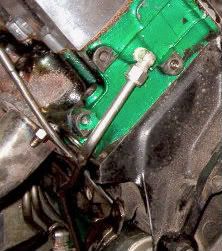
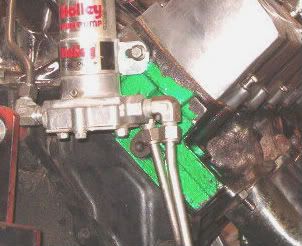
First double check the return passage where it runs back through the head and block for properly alligned return passage back into the valley (mine didnt line up right where the head and block mated) so with some mild porting I had a smooth clean passage. Then when familiar and satisfied with the way it all flowed I drilled and tapped into the same passage for my return lines, first couple of pics shows approx location, there isn't alot of room for error so you'll want to make sure you measure twice and drill once (I tapped a 1/4 pipe thread into the head for the fitting (1/4 pipe to 3/8 compression 90*).
Then I went to the hardware store bought a ( 1/2 pipe to 3/8 compression 90*, and a 1/2 coupler) then I cut the coupler in half and made two bungs to weld into the pan, before I drilled holes in the pan I created the two separate paths for return lines (Some will say the starter/logs gets in the way so "t" off the filter/passenger side and run ONE SINGLE line back to the pan) But when I mocked mine up there was plenty of room so I opted for the dual returns.
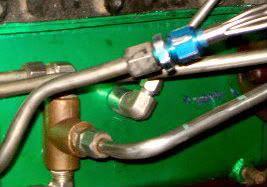
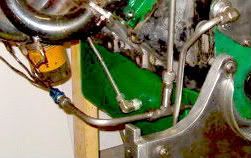
The other pics are where the welded in bungs will go exactly, I marked them drilled the holes, welded them in, then sent the pan (with all the metal/slag) to the machine shop so it could be hot tanked and cleaned up with everything else.
I didnt do it in this order last time I went through the bottom end and ended up not wanting to risk leaving behind shavings in the pan (after block was rebuilt and ready to install) so I plugged the holes and slapped the pan on, and ran it without finishing it.........every time I put my foot in it, I regretted not doing it right when I had the time.
Any way I know this got a little long winded but as simple as it looks it takes some thinking out, and hopefully this will help, and simplify it for you.
Good Luck !!! and keep us posted.
John